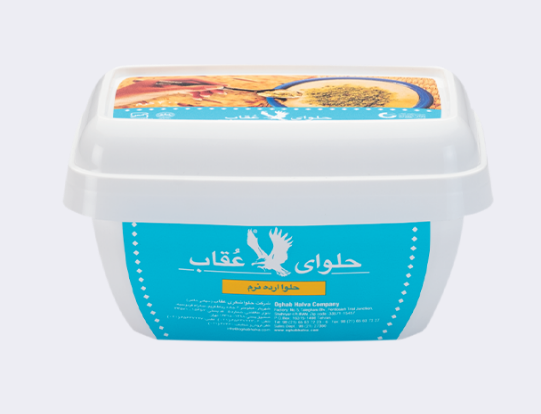


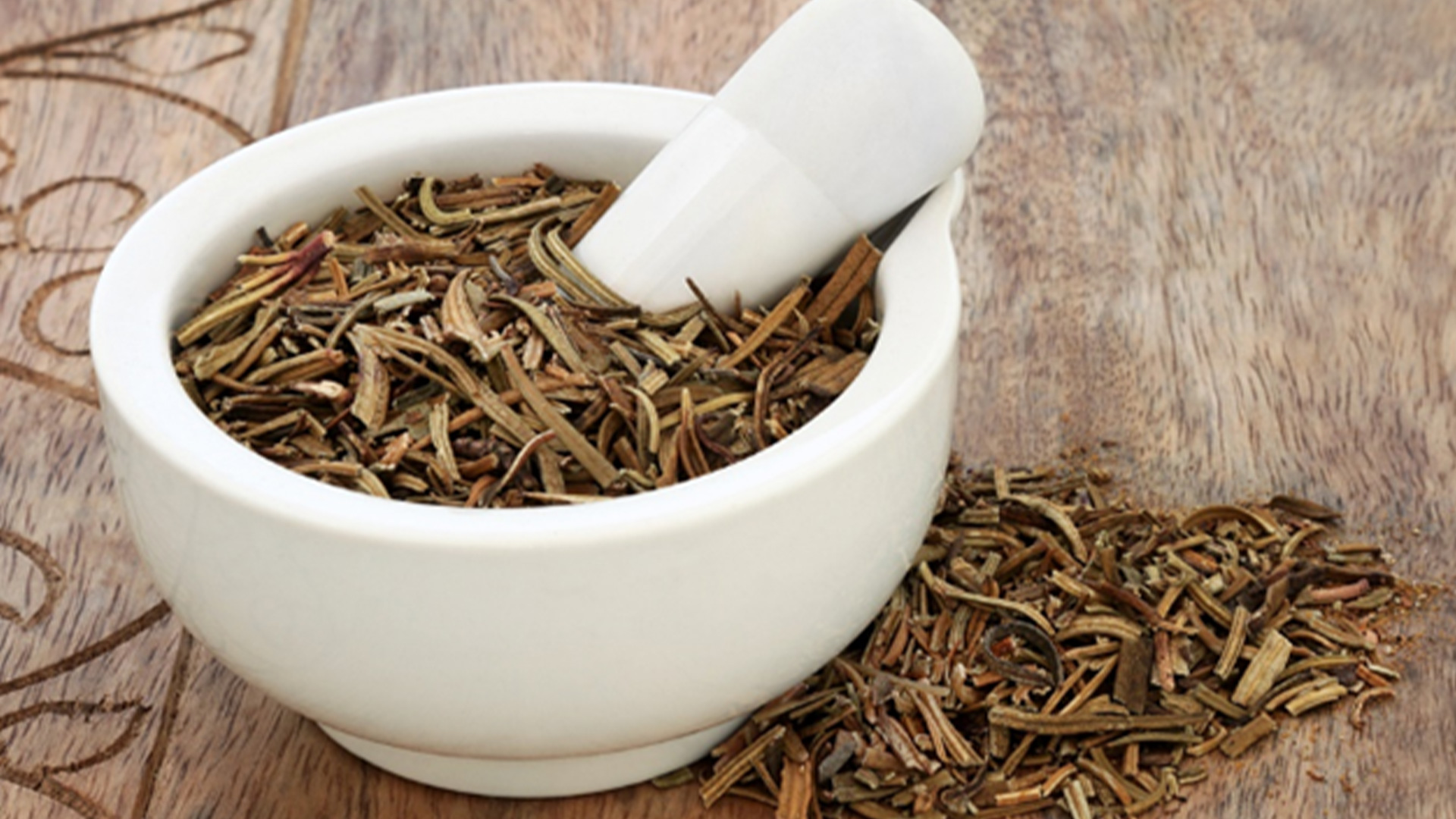
In sesame halva, Saponaria extract is used to harden the halva and make it doughy, so that the sesame halva becomes a stick or string that sticks together and is brittle, and does not have the oily doughy state of tahini halva.
Saponaria extract has a bitter taste. For this reason, many people wonder what the use of Saponaria extract is in tahini halva , which has a sweet taste.
Saponaria extract is an interesting and lesser-known ingredient that plays an important role in preparing and improving the characteristics of tahini halva. This extract is extracted from the root of the Saponaria plant and is known as one of the three most important and widely used extracts in the food industry. This plant grows naturally in Iran and some Asian regions and has been used for centuries for food purposes. The topic we are discussing is the role and application of Saponaria extract in tahini halva and premium products such as the products of the Oghab halva Group.
What is Saponaria extract and how is it prepared?
extract is a thick brown or yellow liquid with a bitter and relatively strong taste. This extract is obtained by boiling fresh or dried roots of the Saponaria plant in water and extracting its juice. In the extraction process, insoluble and excess materials are usually filtered so that only the clear, original juice of the plant remains.
What makes Saponaria extract so special is the soap compounds (saponins) contained in it. These compounds give this extract unique properties that are very useful in the processing of food products, especially sweets, halva, and Tahini halva.
The role of Saponaria extract in tahini halva
Many consumers may wonder why a bitter-tasting extract is used in a sweet and popular product like tahini halva? Or what is the use of Saponaria extract in Tahini halva really? The answer is that the chemical properties of this plant extract play an important role in maintaining the quality, texture, and shelf life of Tahini halva.
In the process of making Tahini Halva, the extract of Saponaria causes reactions in the sugar syrup (which is the main element that binds the Tahini dough and sugar). In fact, these reactions occur mainly due to the presence of saponin. This substance has foaming properties and contributes greatly to the production of an elastic, soft and uniform texture in Tahini Halva.
How does Saponaria extract work?
The role and use of Saponaria extract in Tahini Halva is not limited to this; adding this magical extract will also stabilize the structure of Tahini Halva and prevent it from drying out and hardening prematurely. The final product will have a soft, delicious, tasty and hearty texture; obvious features that are one of the secrets of the deliciousness of the products of the Oghab Tahini Halva Group.
Benefits of using Saponaria extract in the Halva-making industry
The effect that Saponaria extract has on the quality and texture of Tahini Halva has greatly increased its use in the production of this product. Among the benefits of using this herbal extract are the following:
Improving texture and increasing volume
By creating fine and stable foam in the Tahini halva dough, the Saponaria extract makes the texture and taste of this food special and pleasant, and takes it away from the dry and sandy or simple doughy state. In the past, some manufacturers used chemical additives to increase the volume in the preparation of this delicious halva. Consumption of these substances endangers human health.
Today, large and reputable companies such as Oghab Halva prefer to use natural Saponaria extract in the preparation of their food products, which is healthy and harmless.
Helping to combine ingredients better
One of the most important problems in making sesame products is the proper and uniform mixing of tahini with sugar syrup, dates or grapes. Saponaria extract helps to homogenize this mixture and results in a product without coarse grains and unmixed pieces of sesame paste with syrup.
Eliminate roughness or mushy state
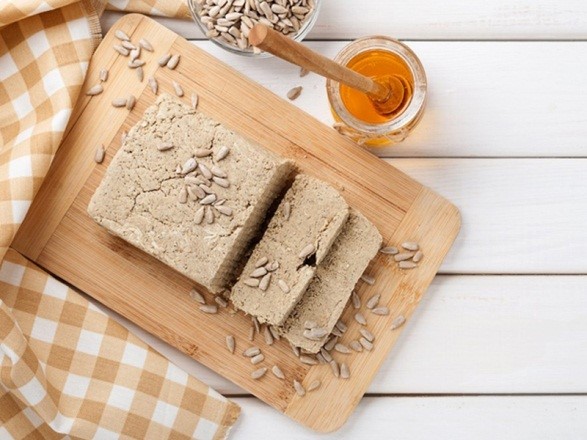
Some types of tahini halva become mushy or have a sandy texture after a while in the absence of Saponaria extract. Saponaria extract, by creating a more coherent structure in tahini halva, prevents the formation of a rough and mushy state in it and effectively prevents such defects. With the help of this herbal substance, tahini halva has a longer shelf life and will remain fresh, soft and uniform for a longer period of time.
Increase product shelf life and stability
The presence of Saponins and the physical properties of the extract of the tree make the halva not subject to drying out, mold or spoilage. This feature is especially important in industrially packaged products that require long-term storage.
Preventing sugaring
Sometimes in low-quality sweet and sugary products, the sugar syrup crystallizes over time. This phenomenon manifests itself in the form of sugar or small crystals. The phenomenon of sugaring will cause a decrease in product quality. Using the herbal extract of the tree can adjust the texture and composition of the halva in such a way that this happens later.
The process of producing the halva with the Saponaria extract
For those who are looking to use the Saponaria extract in the halva, it can be interesting to get acquainted with the production procedure of the Oghab halva. The following steps are followed in the production of this product.
- Preparing tahini using processed, fresh, and quality sesame: At this stage, the processing temperature and the degree of fineness of sesame seeds are carried out with high precision and under the supervision of experienced experts.
- Preparing concentrated sugar and glucose syrup: By combining glucose and sugar in water and completely combining the two, a firm and stringy syrup is prepared.
- Preparing Saponaria syrup: At this stage, the dried and powdered sap of the Saponaria plant is prepared and puffed.
- Adding hot syrup to the foam of Saponaria extract: This is done slowly and by double-walled mixers with controlled temperature. Finally, at this stage, a stable and thick emulsion is obtained.
- Adding tahini: tahini is added to the emulsion that has cooled and reached a temperature of 60 to 70 degrees Celsius and stirred until the mixture is completely smooth.
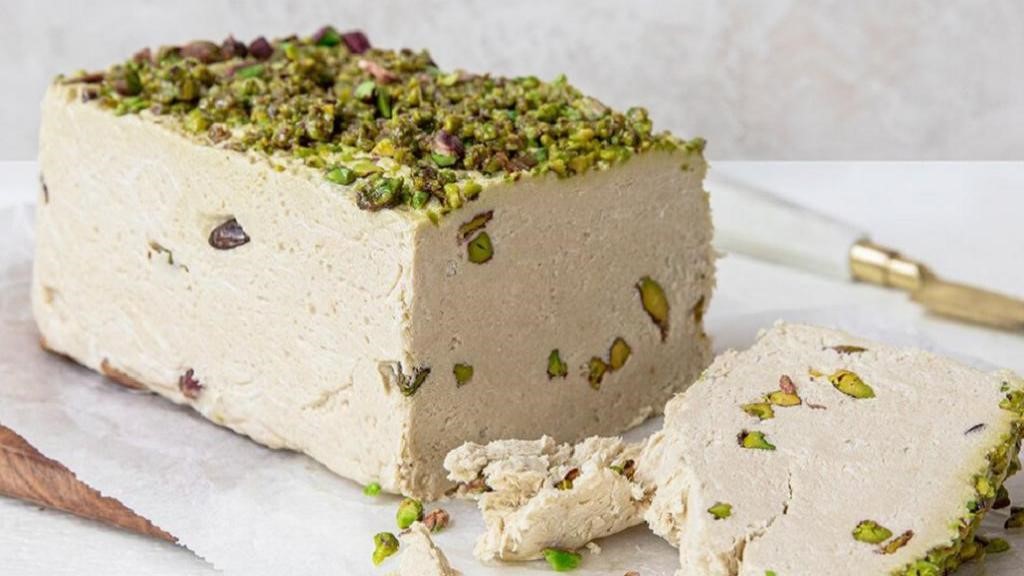
Adding spices, molding, and packaging: At this stage, depending on the type of tahini halva, cardamom, cinnamon, vanilla, pistachio powder, peanut powder, etc. are added to the product. The resulting mixture finally goes through the molding, packaging, and quality control stages and reaches the consumer.
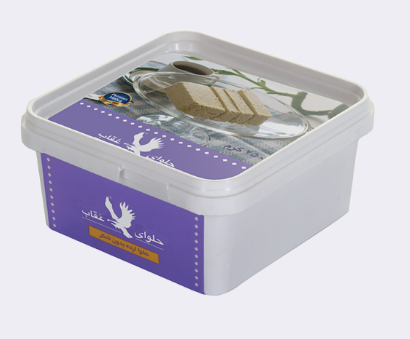
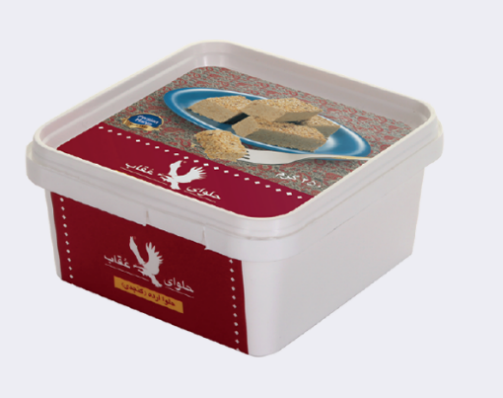
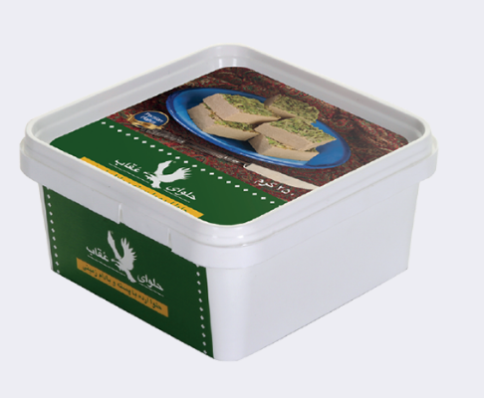
Tahini halva shines with the familiar name of Oghab
Taste and quality come together when the name of Oghab Halva products comes into play. Oghab employees are always trying to use the latest knowledge to produce and offer products that meet the needs and tastes of consumers; because customer satisfaction is the main goal and foundation of their work. We have left your hand wide open in choosing. Plain Halva Ardeh, Halva Ardeh decorated with pistachios and peanuts, Sesame Halva Ardeh, Traditional Halva Ardeh with a soft texture, and Sugar-free and diet Halva Ardeh are the products we have offered to give you the right to choose.
If you are a fan of tahini halva and the quality of the raw materials and its soft and hearty texture are very important to you, Oghab tahini halva, with its wide variety of products, can be the best option for you.
Summary
In short, Saponaria extract is a valuable and completely natural additive in the preparation of Halva Ardeh and many Iranian sesame products. By creating a stable foam and helping to better combine the ingredients and properly structure the raw materials, this extract not only enhances the quality and taste of the product, but also greatly helps to maintain the freshness, desirable texture and longer shelf life of Halva Ardeh. Features that make tahini halva of Oghab tahini halva a healthy, delicious and popular food.